Bernegger Group / KUHN
KOMATSU
Excavator Fleet
Five new Komatsu crawler excavators have been added to the Bernegger Group’s machinery – equipped with buckets manufactured by Winkelbauer. This latest handover marks yet another joint project that underlines the long-standing and trusting partnership between Bernegger, KUHN and Winkelbauer.
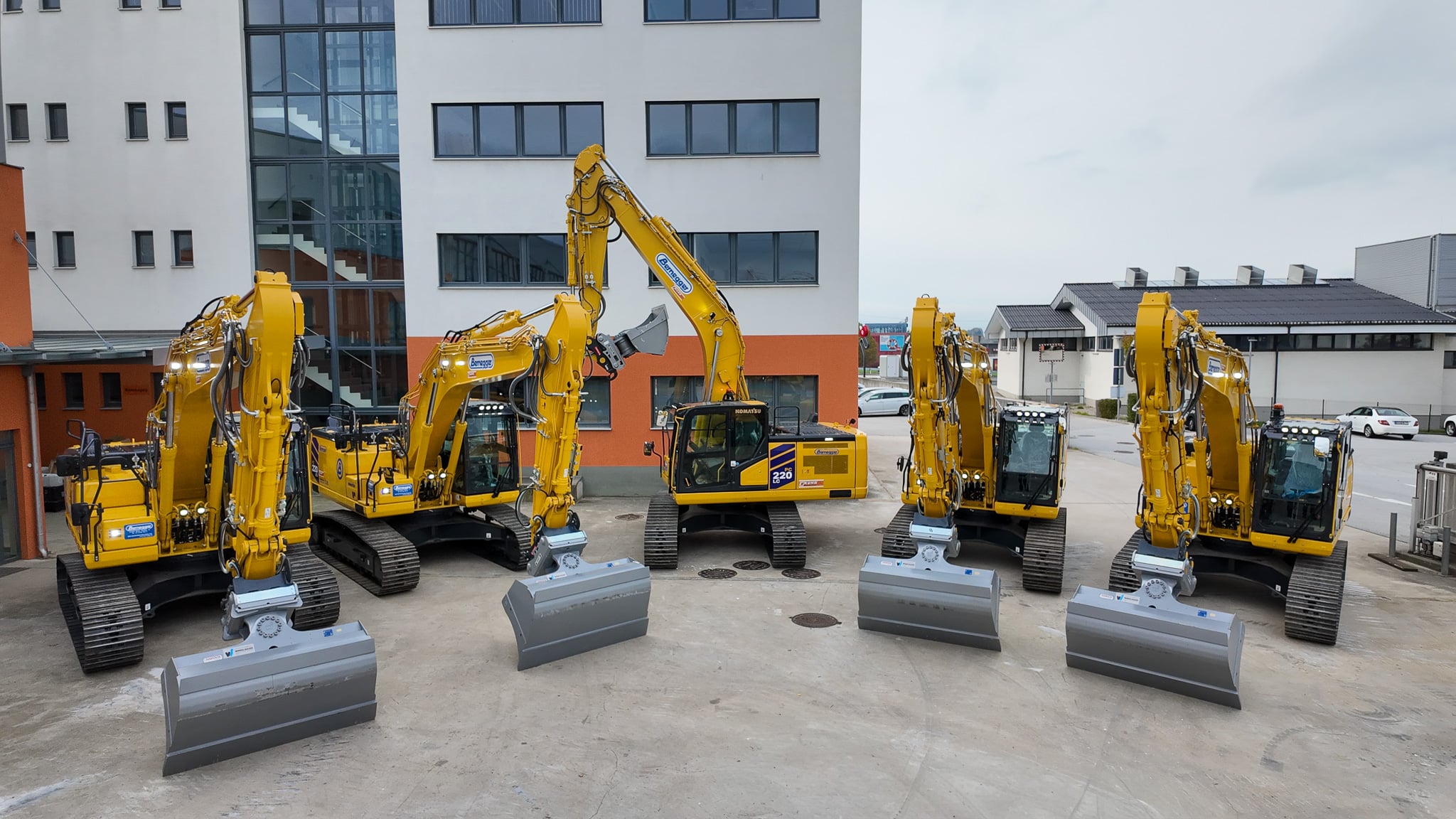
PC220LC12 / PC220LCi-12
KOMATSU crawler excavators
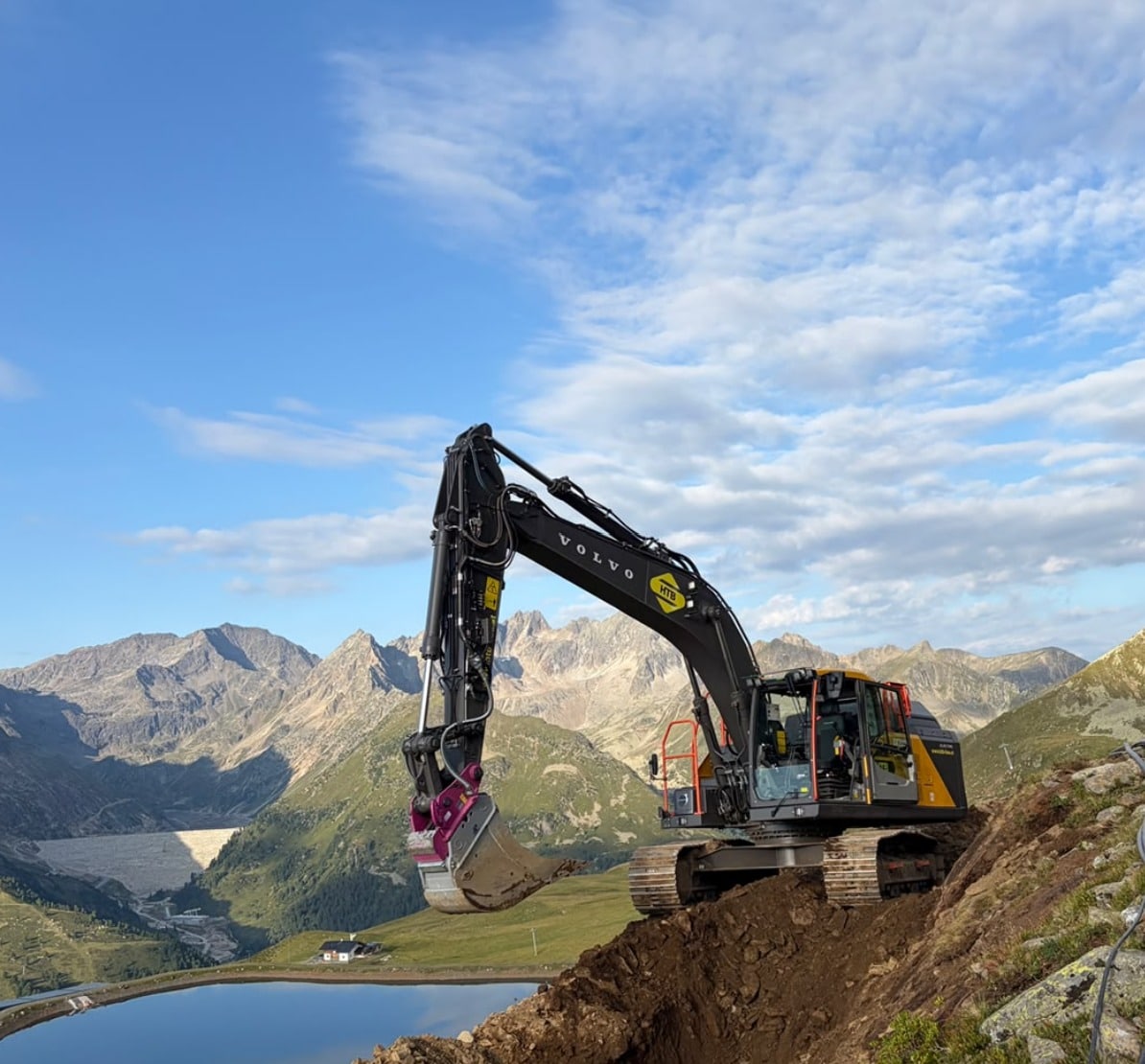
With three Komatsu PC220LC-12s and two PC220LCi-12s, Bernegger is investing in Komatsu’s latest generation of excavators. As well as lower fuel consumption and greater digging and lifting power, two of the five machines are fitted with an integrated 3D machine control system. The new excavators are being used by the family-run business for earthworks. The excavators are equipped with robust Winkelbauer buckets made from high-wear-resistant Hardox® steel.
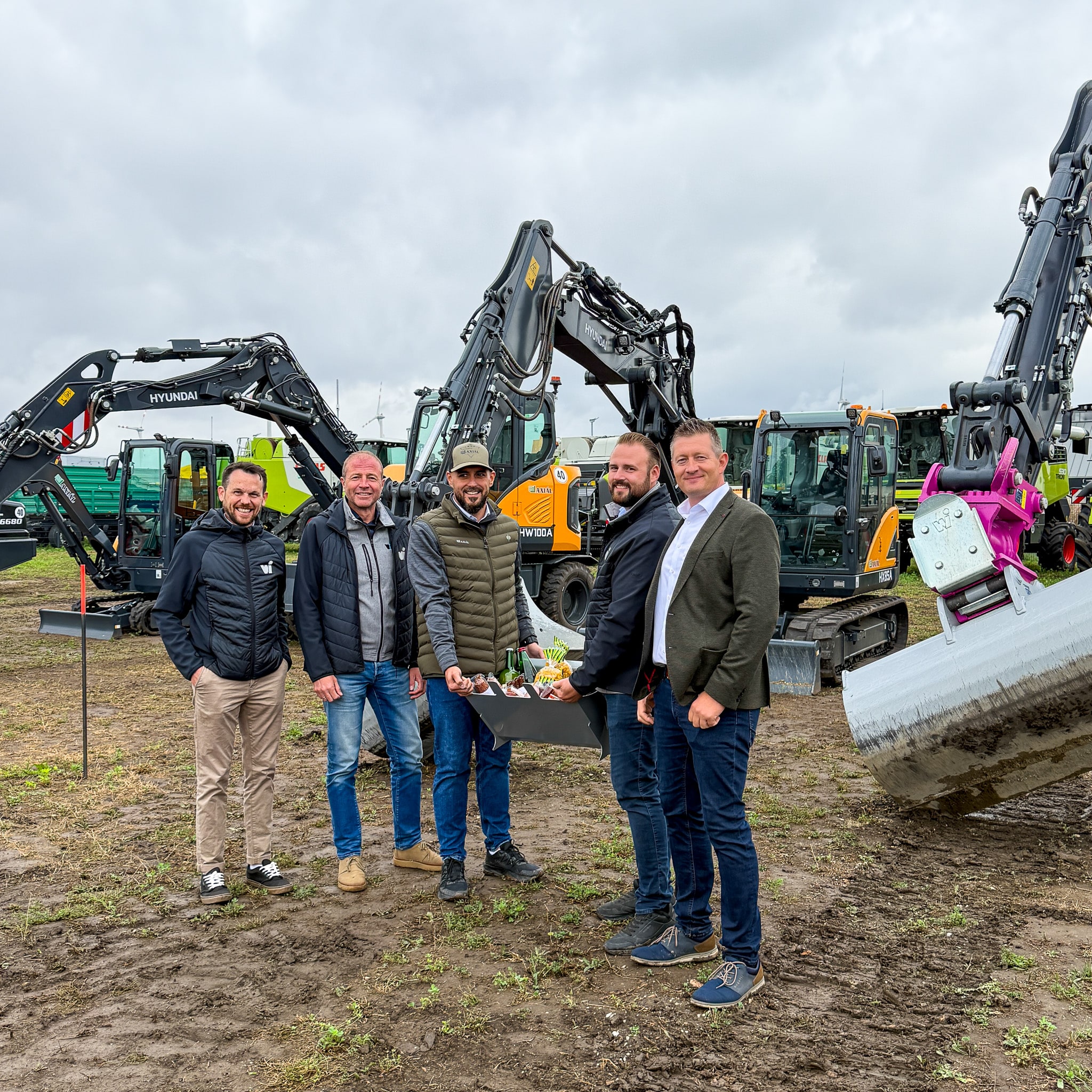
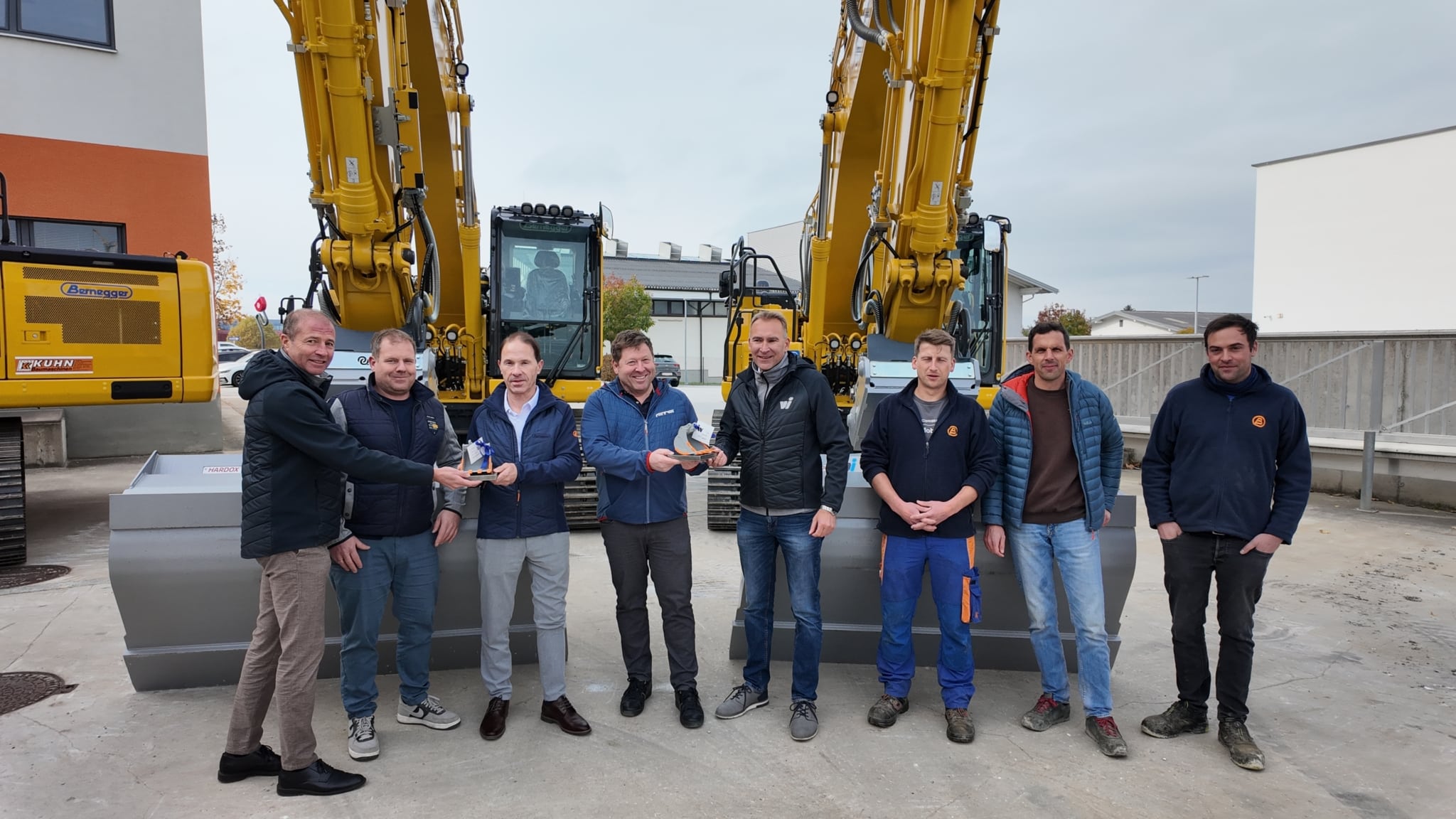
From left to right: Georg Fetz (Winkelbauer), Manuel Schmidthaler (Bernegger), Peter Seebacher (Bernegger), Max Eibl (Bernegger), Andreas Zuschrader (Winkelbauer), Hannes Kienbacher (Bernegger), Joachim Schwaninger (Bernegger), Daniel Haider (Bernegger)
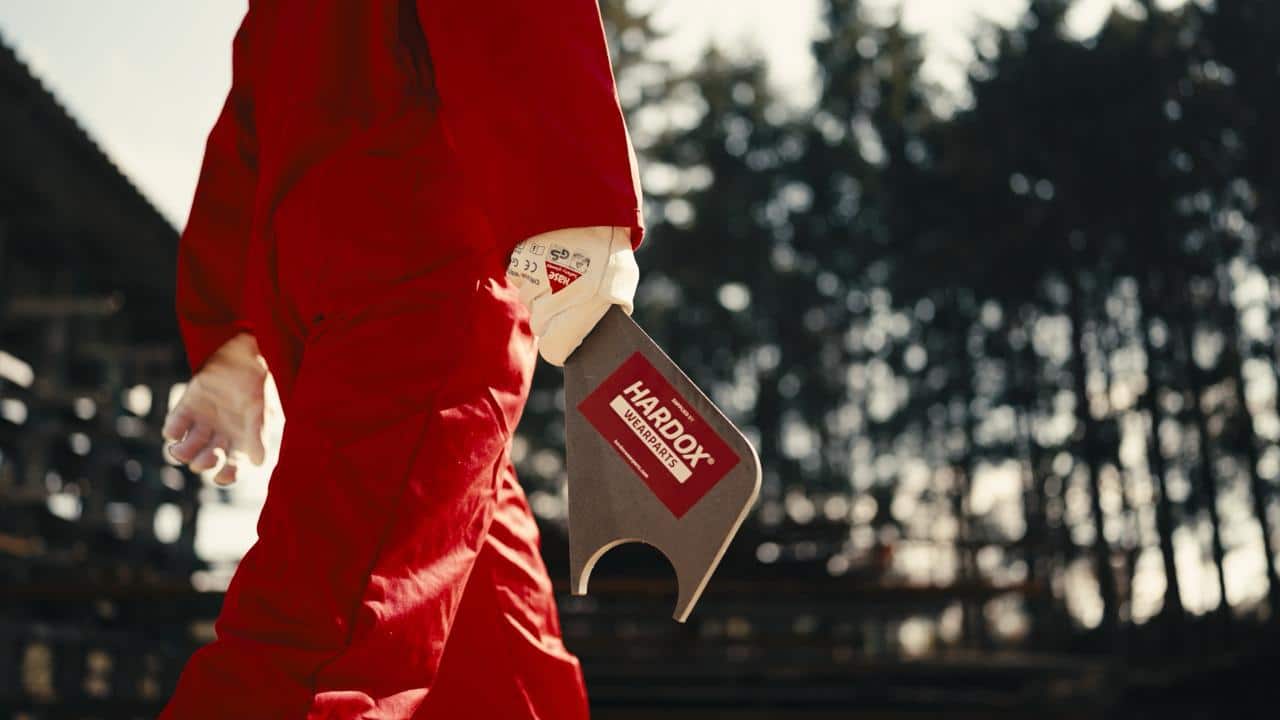
Hardox in my body
Excavator bucket package
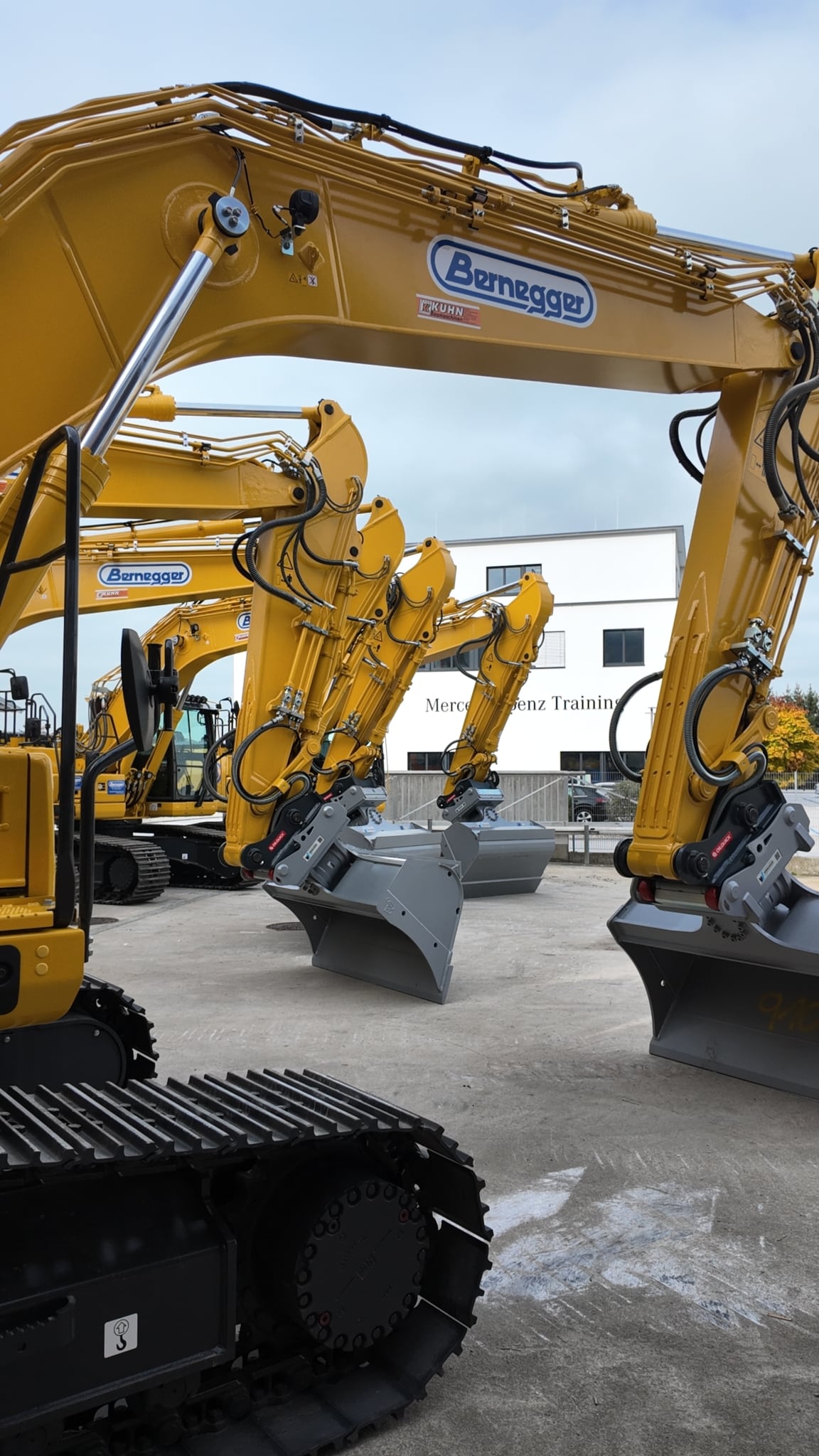
When expanding its fleet of machinery, Bernegger relies on the tried-and-tested quality from Anger. The new construction machinery has been fitted with digging buckets and trench-clearing buckets, including a swivel motor and a peel-off edge.
Hard facts trench-clearing buckets:
- Cutting width 2000 mm
- Capacity: 1.24 m³
- Swivel range 2×50°
- Cutting edge HB500
- Weight: 1,240 kg
Long-standing partnership
The Bernegger Group, based in Molln in Upper Austria, was founded in 1947 and now operates in the raw materials, construction, and environmental sectors. The family-run business employs around 1,000 staff across 20 sites in Austria. Under the motto ‘Moving towards a sustainable future’, the family-run business also prioritises efficient technology when it comes to its machinery. With a wide range of durable attachments made from highly wear-resistant Hardox® steel, Winkelbauer helps to ensure that construction machinery is used efficiently, economically, and in a way that conserves resources.